
What is RSV?
RSV is a virus that causes respiratory illness. It spreads easily via droplets produced from coughs and sneezes, or via contact with contaminated surfaces.1
Risks for infants and children
Almost all children come into contact with RSV in the
first two years of life.2
In fact, RSV is the most common cause of
bronchiolitis and
pneumonia in children.3
RSV causes over 25,000 hospital admissions of children in Italy.4
RSV is responsible for
45% of hospital admissions and deaths, with these cases usually occurring in infants under six months of age.5

Four out of ten children who have had bronchiolitis, particularly those who have needed hospital treatment, are at a higher
risk of developing
asthma later on in life.8 Catching RSV during early childhood may also increase the risk of developing
cardiovascular
problems in adulthood.9
Why get vaccinated?
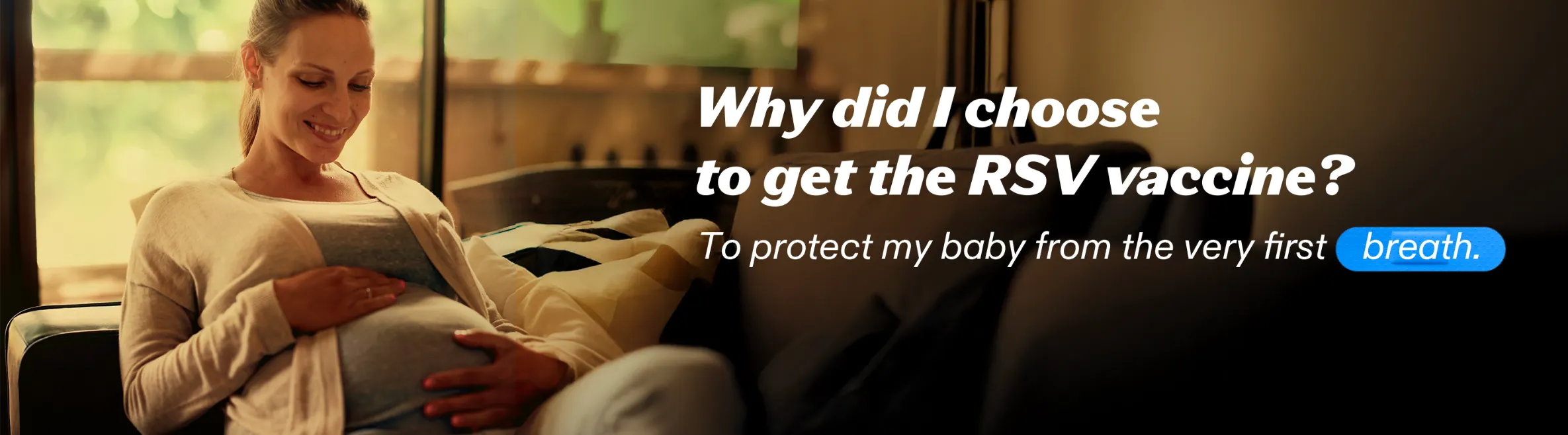
Getting vaccinated during pregnancy can prevent RSV-related diseases and their consequences.10
Talk to your doctor about getting vaccinated.
Bibliografia:
1. Portale europeo delle informazioni sulla vaccinazione. Virus respiratorio sinciziale (VRS). Ultimo accesso: novembre 2025.
2. Centers for Disease Control and Prevention. RSV in Infants and Young Children.
3. Piedimonte G, et al. Pediatr Rev. 2014;35(12):519-530.
4. Alleanza italiana per l’invecchiamento attivo. Infezioni respiratorie e vaccinazioni. Ultimo accesso: novembre 2025.
5. Baldassarre ME, et al. Ital J Pediatr. 2023;49:66.
6. Bergin N, et al. Int J Environ Res Public Health. 2018;15(5):847.
7. Nakajo K, et al. Int J Infect Dis. 2022;124:14-20.
8. Società Italiana Pediatria (SIP). Virus respiratorio sinciziale e bronchiolite, tutto quello che i genitori devono sapere. Ultimo accesso: novembre 2025.
9. Zar HJ, et al. Lancet Respir Med. 2024;12(10):810-821.
Information campaign by Pfizer S.r.l., authorised by the Ministry of Health on 18/03/2026.
This information does not replace the advice of your doctor, whom you should always consult.
PP-UNP-ITA-5263